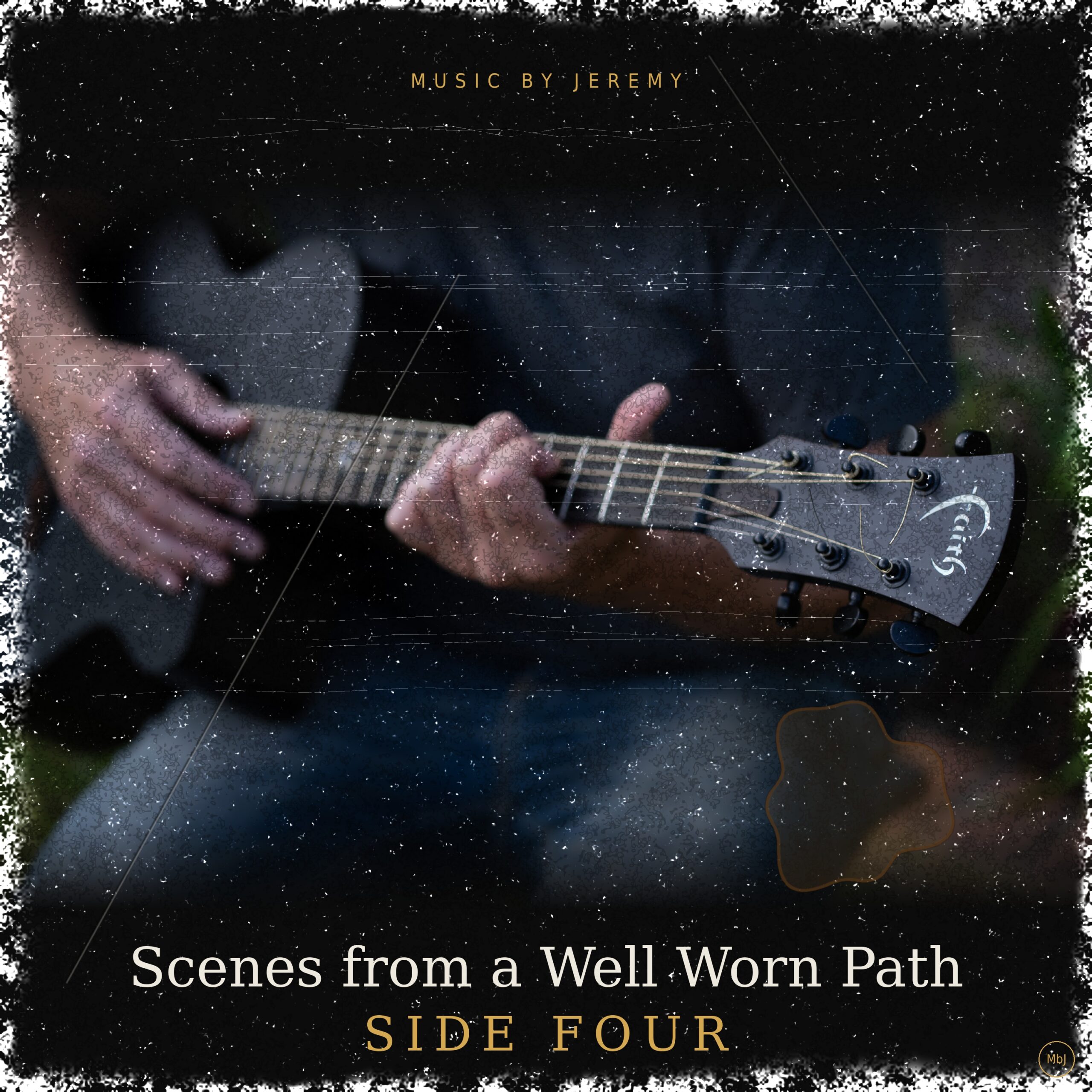
Music by Jeremy – Scenes From A Well Worn Path (Side Four) | EP Review
There’s something quietly admirable about an artist who can take the complexities of modern life, find the humour in the absurd and still manage to leave space for tenderness. Scenes From A Well Worn Path (Side Four) is the conclusion to Jeremy’s ambitious 24 track autobiographical project and it’s a very personal, very reflective and very tender set of six songs. It came out on the 25th of November 2026. It’s all about ageing, consumerism, the desire for recognition, romantic memories, financial pressure and ultimately the sheer beauty of just being alive. It’s built on Jeremy’s songwriting and his acoustic guitar as the bedrock of the record and has a very distinct British observational quality to it, a dry wit, a lot of thoughtful storytelling and a very understated indie folk feel. The first track “Dinosaur” is very much about the realisation that the world keeps on moving on, irrespective of what you’ve achieved or how important you once were. It’s a very funny and very bleak song in its central premise, the slow realisation that you’re going to become irrelevant and the helplessness of watching the world go on around you. Rather than go in with the self pity, Jeremy manages to find the humour in the situation and it’s very relatable without in any way lessening the sadness of the song. “Juicy Red Apple” turns to the subject of consumer culture and the food industry and questions a system which seems increasingly designed around the interests of the company rather than the people who are actually buying the product. It takes the image of Snow White’s poisoned apple and the old saying that a stranger will never offer you a sweet and turns it into a very sharp piece of social observation, using something so familiar to a child to point at the very uncomfortable relationship between temptation, manipulation and the commercial world.

The EP continues the theme of human aspiration with “Rollright Stones” which is a very interesting song in that it’s inspired by the Rollright Stones in Oxfordshire. Jeremy uses the history of the stones to consider the human desire to leave something behind. The stones were built many thousands of years ago at a very considerable physical cost and they’re still there. The people who built them are long gone and their identities have vanished completely. What remains is a tourist attraction, a monument now completely surrounded by the modern day tourist, the souvenir seller and the person talking about crystals and aliens and all that. There’s a very quiet irony in that, really. You’ve invested all that effort in creating a legacy and all that’s left is the monument, and the meaning of it is completely lost. The song is really asking the question of whether being remembered is actually that important. “Vincci Bitten” brings the EP back into the intimate world with that one. It’s inspired by a lovely weekend in Barcelona and it’s a very different song in that it’s very much about a private experience between two people. Jeremy mentions the Yoko Ono and Lou Reed brass plaques at 7 Portes, but it’s very clear that the rest of the story is his and his wife’s. That little touch of playful discretion is what gives the song its real character, it’s a song about a memory that matters which doesn’t need to be explained. It’s a very direct contrast to the previous song which was asking the question of being remembered by strangers. “Slow in Fast Out” brings us back to the everyday frustrations with “Slow in Fast Out” which is inspired by Charles Dickens’ famous observation on income and expenditure. It was written during a very familiar period of cash flow squeeze and it starts with Jeremy reacting to hearing the quote on the radio: “Screw Mr Micawber”. That’s the very essence of the song really, the comic spirit of it. It’s a very common subject to write about, money, but Jeremy’s ability to find the humour in the pressure is what makes it work. It’s a good example of how he can take a very ordinary frustration and turn it into a very good piece of storytelling.
The closing track “Saudade” provides the emotional resolution that this four part project needs. It was written by the river near Stratford-upon-Avon on a very hot July day as Jeremy was trying to work out how to finish the record. Rather than go for a big dramatic finale or some kind of pronouncement on the nature of life, it just came about as a result of the scene around him. The essence of the song is that happiness isn’t necessarily to be found in wealth, in status, in monuments or in the prospect of being remembered. It can be right there in the moment, in the things that you just don’t pay attention to when you’re looking for something more. The song is very much in the acoustic mode, it’s a very warm and unhurried groove with a very intimate vocal. The line “If there’s a heaven to plan for it’s not more lovely than this” is the central idea of the whole thing and it’s a beautiful line because it doesn’t pretend life is easy. It just says that you can be happy in the midst of difficulty if you’re just alert enough to see it. That’s the philosophy of the record really. Across the six songs we have a very clear sense of a songwriting approach that is observational, intelligent and very much about the contradictions of life. You can clearly hear the influence of John Lennon, Bob Dylan, Randy Newman and David Bowie in the way the songs are constructed, the characters and the way the lyrics are delivered. It’s all very accessible, very unpretentious. The use of generative AI to produce the vocals, the drums and the more difficult guitar parts is also a very important part of the project. It enables a very much one person home studio record to get beyond the limitations of that. The technology is used to serve the songwriting rather than to replace the songwriting. Scenes From A Well Worn Path (Side Four) is the perfect way to close such a substantial creative exercise. It’s a very simple reminder that the greatest rewards of life are often to be found in the unremarkable. The most significant legacy you can leave may not be in the things you leave behind at all, but in the things you notice, love and experience whilst you’re here. It’s a very fitting conclusion to a record that’s been built around the questions, the mistakes, the memories and the little discoveries of a life well lived.