The Bastas Project — The Lighthouse in the Dust
The Bastas Project’s The Lighthouse in the Dust is an album that finds movement in the middle of hardship. Released August 25, 2026, the record brings together percussive acoustic guitar, rolling dembow grooves, disco-inspired four-on-the-floor rhythms and Afrobeat percussion, creating a sound that can feel both celebratory and emotionally heavy at the same time. That contrast is central to the album’s identity. The music invites you to move, but underneath the grooves are songs about grief, exhaustion, doubt and the difficult process of rebuilding. The family band from Woodstock, Georgia draws from personal loss, particularly the loss of Nadine Basta, but instead of turning the album into a collection of sorrowful reflections, they transform that experience into music that feels communal, rhythmic and determined.
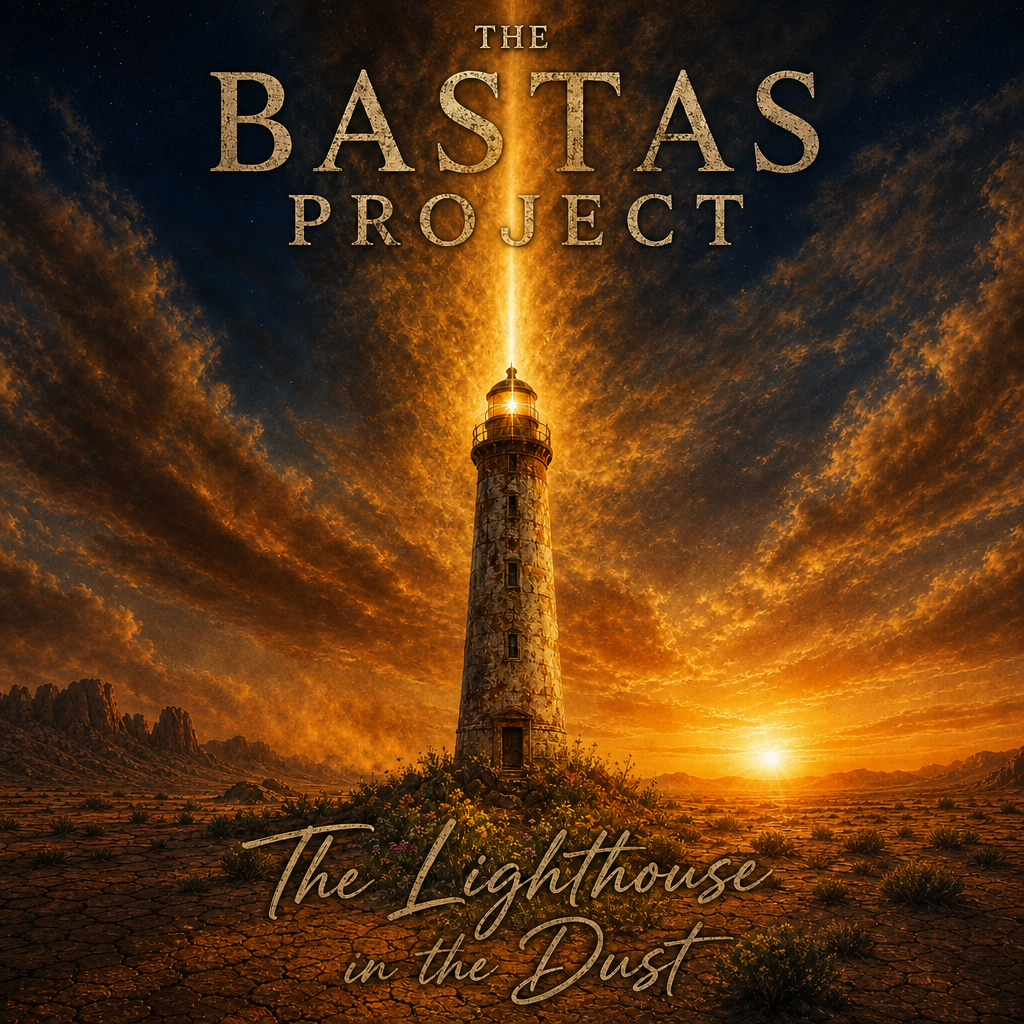
The title track, “The Lighthouse in the Dust,” captures that philosophy immediately. It begins with stripped-back acoustic guitar before opening into a driving dembow-disco groove, turning images of scarcity and darkness into something much more defiant. The chorus has the energy of a dancefloor anthem, but its emotional weight gives it another purpose. “Concrete Sunflower” takes a different route and may be the album’s most intimate moment, combining slap bass, talking drum and a raspy vocal that gradually expands into communal gang vocals. Its image of a flower growing through concrete becomes a powerful expression of finding an opening where there seemingly isn’t one. These songs show how carefully the Bastas Project connects its lyrical imagery to its arrangements: sparse beginnings give way to increasingly dense rhythms, creating the feeling of emotional pressure finally breaking into release.
What makes The Lighthouse in the Dust especially interesting is the discipline behind its seemingly spontaneous genre collision. Recorded in a home studio, the album was shaped through a three-pass arrangement process that strips away anything that doesn’t serve a purpose, while asymmetrical guitar layering and carefully controlled percussion keep the dense production from becoming cluttered. Even the use of silence is deliberate, creating space for important lyrics before the rhythm returns. The result is music that can work on two levels: you can simply get caught in the groove, or listen more closely and find an album built around grief, responsibility, resilience and connection. Rather than presenting hope as something easy or abstract, The Bastas Project makes it tangible—something you build, protect and sometimes dance your way toward.
“The Bastas Project turns grief into rhythm, creating an album where dancing through the darkness becomes its own form of resilience.”
Facebook, X, Soundcloud, Youtube, Instagram, TikTok, Spotify