From the opening stretch, the shift is undeniable. Where earlier releases leaned into shadow and isolation, “Not Here Not There” introduces light—but it’s not comforting light. It flickers. It refracts. Synth-wave textures shimmer against warped guitars and drifting arrangements, creating a sound that feels simultaneously inviting and slightly unreal, like stepping into a memory you don’t fully trust. A big part of that transformation comes from the decision to hand over vocal duties. The absence of John Beckmann at the mic changes the emotional center of the project. Tanner McGraw’s delivery is restrained, almost observational, while Lawson Mars expands the space with ghostlike harmonies that never quite settle. Together, they give the album a sense of openness—less claustrophobic than past work, but also less anchored. It’s a risk that pays off, even if it occasionally distances the listener from the core of the songs.
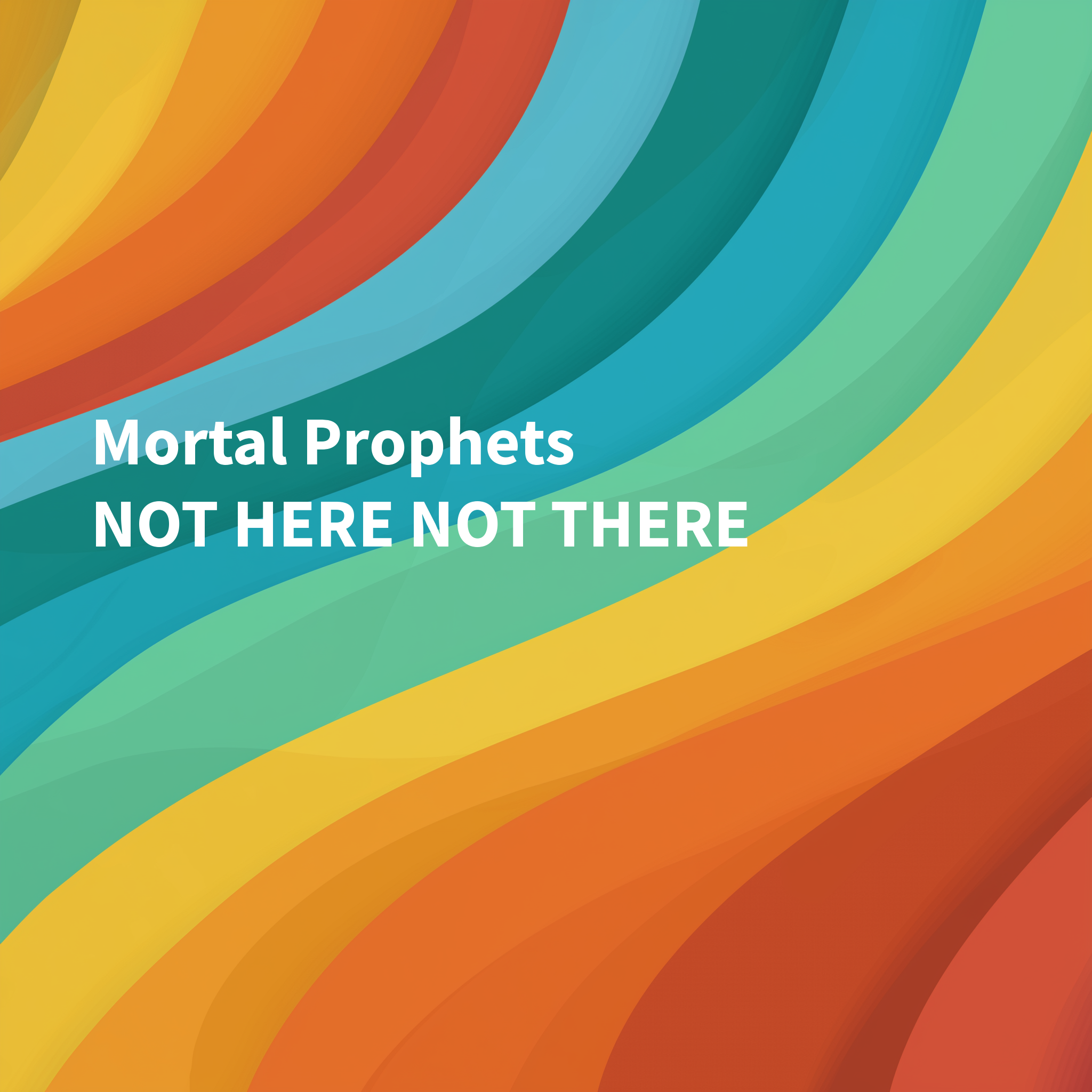
this is Beckmann at his most texturally ambitious. Theremin lines drift in and out like signals from another frequency, sitar flourishes add a psychedelic haze, and the synth work ties everything together with a soft, neon glow. But what stands out isn’t the individual elements—it’s how they’re arranged. Tracks don’t build toward conventional climaxes; they stretch, dissolve, and reassemble, often feeling more like evolving states than fixed compositions. There are moments of striking clarity. “Love Is Found” and “I Can Feel Your Heartbeat” lean closest to something resembling pop structure, offering melodic footholds without sacrificing the album’s dreamlike quality. Elsewhere, tracks like “Wittgenstein’s Silence” and “Where Language Ends” drift further into abstraction, prioritizing atmosphere over form. That push and pull keeps the album engaging, even when it resists easy interpretation. The influence of Syd Barrett and Robert Wyatt lingers in the DNA—particularly in the off-kilter melodic phrasing and emotional elasticity—but this never feels like revivalism. Beckmann isn’t recreating the past; he’s filtering it through a modern, cinematic lens that feels both deliberate and unstable.
If there’s a weakness, it’s the same quality that defines the album: its refusal to resolve. “Not Here Not There” lingers in ambiguity so consistently that some tracks blur together on first listen. There’s no obvious centerpiece, no singular moment that demands attention. Instead, the album functions as a continuous drift—rewarding patience, but asking for it, too. What ultimately makes “Not Here Not There” compelling is its atmosphere. It doesn’t present itself as a collection of songs so much as a space to inhabit—a late-night landscape of memory, distortion, and fragile beauty. It’s brighter than what came before, but not simpler. If anything, the added light just makes the emotional fractures easier to see. This isn’t an album that insists. It hovers. And for listeners willing to meet it in that in-between space, it leaves a quiet, lingering imprint that’s hard to shake.
Facebook, X, Soundcloud, Youtube, Instagram, Spotify, website