
# Eric HZ — “Child”: A Father’s Love, a Cultural Voice, and a Universal Message
Some songs get to you through the grand pronouncements, others get to you through the most fundamental and enduring of human experiences. Eric HZ’s “Child” (《孩子》) is of the latter type. It’s a song about the love between parent and child from a very personal point of view, a point of view forged in fatherhood, family and the values that stay the same as life goes on. It kicks off with the actual laughter of his kids and that immediately establishes the emotional intimacy of the piece. The song then moves on to a truth which is of course far more universal than just one family: children grow up, they make mistakes, they get lost, they fall. But none of that has to mean that the love of a parent is in any way diminished. The song doesn’t present parenthood as some kind of perfect journey. It acknowledges the uncertainty of watching the person you love go out into the world and find their own way. There’s a real tenderness in that. The love is not predicated on the other person staying the same or not making any mistakes. It’s about continuing to love them as they grow into who they are, even if that journey takes them in directions they didn’t expect. **“A child may stumble, may wander, may lose their way, but unconditional love is a place where they can always find their way back.”** That’s the heart of the song. It’s a very personal experience that Eric has lived through as a father and it’s a message that can be understood by people from all walks of life. The opening laughter is very much a part of that personal experience and brings a real family moment into the song as a piece of music intended for a much wider audience. The significance of the song is also in the way it deals with the artist’s identity. It’s a song sung in Mandarin and that’s not just a means of delivering the lyrics. The tones, the rhythm, the cultural memory of the language are all part of the artistic expression. It’s a song that has a very distinct cultural identity and yet the message at its heart is universally accessible. Rather than being a song that is trying to separate out cultural identity from international appeal, it’s a song that brings the two together. It’s a song that says the most authentic form of communication is one that comes from an honest expression of who you are.
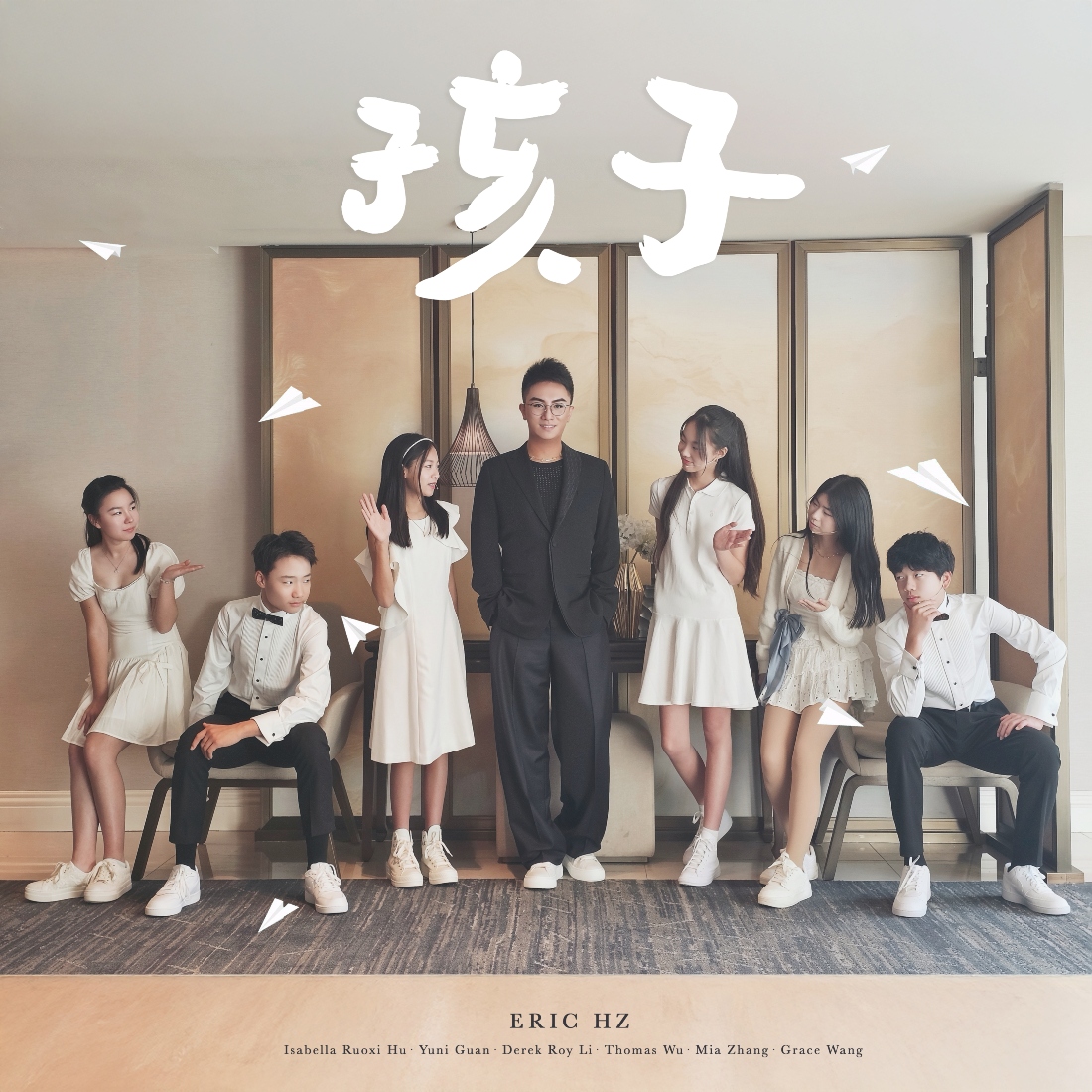
The cultural significance of “Child” becomes much more apparent when you look at it in the context of Eric HZ’s wider artistic vision. As a Chinese singer songwriter, producer, performer and cultural ambassador he is at the nexus of the Chinese and Western musical worlds and is very much intent on creating music that is warm, hopeful and human, without necessarily having to lose its Chinese character. That philosophy was also evident in his participation in the Recording Academy’s 2026 “A Conversation with Leaders in Asian Music’ where he stated that the future of Asian pop should be “a door, not a wall”. That is a very good way of articulating the purpose of ‘Child”. For Eric, cultural identity isn’t something that has to be watered down in order to be palatable to a global audience. It can be a doorway through which people can experience different languages and different cultures. In a world where so many artists are moving in and out of different genres and markets, that’s the principle he’s working from. He doesn’t see Chinese music as something that has to be in competition with K-pop or Western pop. He envisions a world where different traditions can co-exist, creating real opportunities for cultural exchange. “Child’ is an embodiment of that philosophy. It starts with a personal experience and the emotional resonance of that experience is something that can travel beyond the circumstances in which it was created. The Chinese language is absolutely fundamental to the song’s identity and yet the theme of parental love is something that can be felt by anyone. Eric’s own journey as an artist is a reflection of this. A professionally trained vocalist he studied with the legendary soprano and Chinese opera artist Wan Shanhong and that training is very much part of his approach as a contemporary singer and performer. He has also founded the Chinese American Federation of Arts and Culture and is the founder and Executive Producer of the Chinese American Music Festival. He performed “Child” at the 21st Chinese American Film Festival and Chinese American TV Festival Golden Angel Awards Ceremony where he was presented with the International Outstanding Contribution to Arts and Culture Award. He has also received Congressional Recognition for his work in the area of Chinese American cultural and artistic exchange. A very significant moment in that journey was his performance at Alice Tully Hall at Lincoln Center with the great Chinese artist Tan Jing. For Eric that was more than just sharing a stage. It was a demonstration of the potential of art to build people to people connections between China and the US. All of that is context for ‘Child’ but the song itself is the heart of it. Its cultural roots are not a barrier to its emotional power. They are in fact what makes it so personal and so distinct.
“Child” is also part of a broader artistic project in which Eric HZ is exploring the intersection of love, faith and the search for meaning. His companion piece “Encounter” (《还好遇见你》) looks at those very same themes from a different angle, his personal journey of seeking purpose being charted through an encounter with God. “Child” is the outward looking song, the song of the relationship between father and child. “Encounter” is the inward looking song, the song of the search for purpose, grace and direction. Together the two songs represent two sides of Eric’s perspective: the love we give to one another and the faith that enables us to make sense of our lives. Both tracks are currently in the running for the 69th Annual GRAMMY Awards with “Child” being nominated in the Best Asian Pop Music Performance category and “Encounter” in the Best Contemporary Christian Music Performance/Song category. That places them in a professional context but their real significance is in the personal experience that underpins them. “Child” doesn’t need a complex philosophical argument to make its point. It starts from a very simple premise, the premise of loving someone and accepting that their life will not always go as we would have wished. Children grow up, they form their own identities, they make their own decisions and they will inevitably meet with their own difficulties which their parents can’t always prevent. The song’s understanding of unconditional love is that this doesn’t in any way diminish the bond that exists. It’s a song that speaks to parents and to anyone who has ever needed to be reminded that mistakes and difficult times don’t make you less worthy of love. It’s a message of compassion without pretension and of personal experience without exclusivity. Eric’s wider body of work reinforces the idea that you can make connections without everyone having to share the same language, history or belief system. His deep commitment to Chinese culture and his interest in cross cultural exchange provides a model of artistic communication that is authentic rather than imitation. “You don’t have to leave your roots behind in order to reach another heart. Sometimes the most universal message is the one you express most authentically.” That is the essence of “Child” – a song which begins with the laughter of his children and moves on to a meditation on enduring love. It is a song which is rooted in a very real and personal experience and yet is capable of resonating with a wider audience. It is a song about love that remains constant even as the people in it change and a song about the power of sharing our stories in the language and culture that has shaped us to bring us closer to one another rather than pushing us apart. In Eric HZ’s hands, a father’s love becomes an expression of something much larger – the idea that music, when it is sincere and when it is rooted in cultural understanding, can be a vehicle for the recognition of shared humanity.