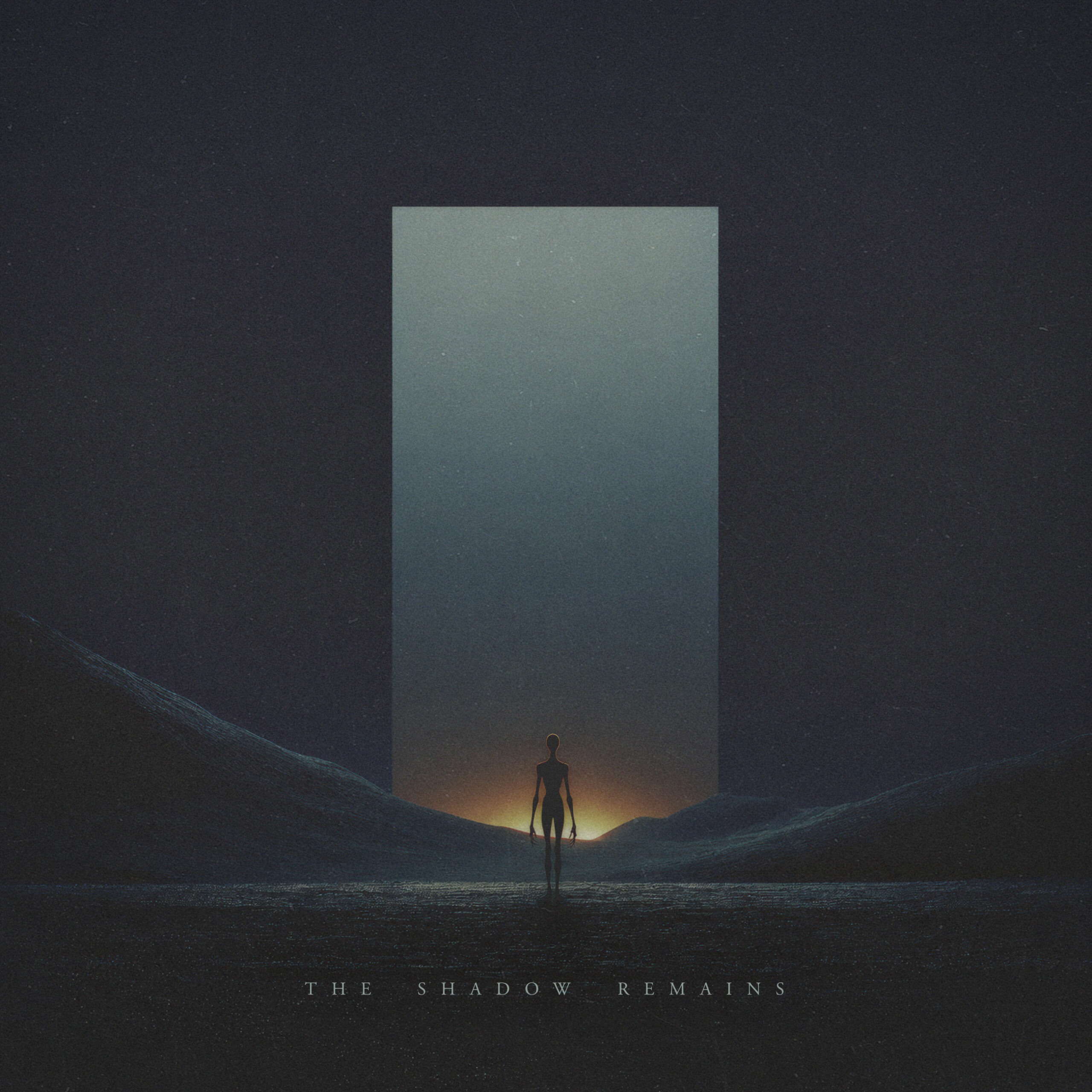
Some songs describe anxiety. Others recreate it. The Shadow Remains by Joseph Turner & The Dudes of Hazard sits firmly in the second category—less a traditional single and more a slow, hypnotic descent into a mindset that refuses to fully loosen its grip. Built around the idea of living in prolonged survival mode, the track doesn’t dramatize fear so much as circle it. It’s rooted in the experience of carrying persistent unease long after the original cause has faded, where the emotion becomes less an event and more a background condition of thought.

From the outset, the production establishes its intent: repetition as tension. A frame-drum pulse anchors the track, with layered percussion and acoustic guitar phrases looping in and around it like shifting thoughts that never fully resolve. Instead of building toward a conventional release, the music maintains forward motion without arrival. That sense of motion is key. The arrangement feels ritualistic rather than linear—less verse-chorus progression, more evolving pattern. Mantra-like vocals reinforce this effect, sitting inside the rhythm rather than above it, as if the voice is part of the same mechanism as the percussion rather than something guiding it from outside. There are clear touches of dark Americana in the DNA here, but the track resists being pinned to any single genre. It borrows from indie, alternative, and atmospheric folk, yet its real identity comes from mood rather than classification. Brass textures appear not as decoration, but as part of the circular motion, adding weight without breaking the trance.
What makes The Shadow Remains effective is how it treats discomfort as structure. Rather than resolving anxiety into clarity, it allows it to persist in musical form—controlled, contained, and shaped into something listenable without being diluted. That approach also reflects the broader identity of Joseph Turner & The Dudes of Hazard as a project. Built around a rotating cast of collaborators, the music feels intentionally fluid—never locked into a fixed band dynamic, always slightly in motion. That looseness gives the track room to breathe, even as its emotional core stays tight and focused. There’s a moment in the track where repetition stops feeling like repetition and starts feeling like environment. That shift is subtle, but it’s where the song finds its strongest footing. It stops asking for attention and simply holds it, creating a space that feels less like a narrative and more like being inside a thought that refuses to fully dissipate. the song doesn’t attempt closure. Instead, it reframes survival as perspective—looking back at earlier fear not as something conquered in a cinematic sense, but something integrated and understood from a distance. That distinction is what keeps the track from tipping into despair. What lingers most after it ends isn’t a hook or a lyric, but a sensation: forward motion without escape, tension without collapse, and a strange calm that emerges from sitting inside something uncomfortable long enough for it to change shape. The Shadow Remains doesn’t resolve the darkness it explores. It learns how to move through it.