“Some music does more than cross borders; it reminds you that the human voice can bridge worlds that words simply cannot.”
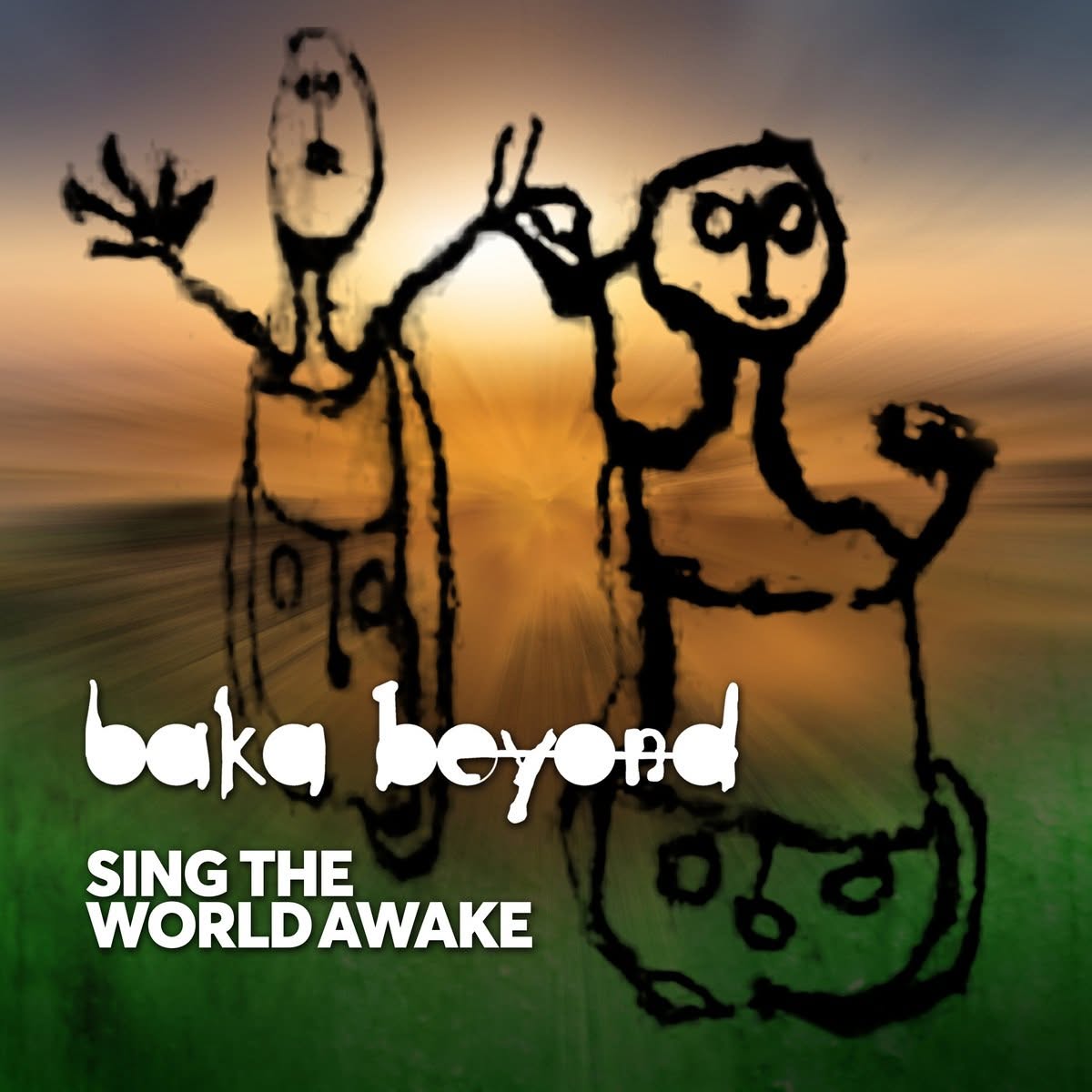
After over 30 years of music making Baka Beyond are back with Sing the World Awake, their first new album in 12 years and one of the most significant records in their history. It’s out 18th September 2026 on March Hare Music and is an 11 track record which is firmly based in the ancient yeli singing of the Baka women of the Cameroonian rainforest. It’s an album of friendship, of cultural exchange, of memory and of a deep respect for the people whose music has been absolutely central to the band since the very beginning. The importance of this record has already been recognised internationally with The Guardian naming it Global Album of the Month for September 2026. Ammar Kalia called it “Deeply skilful and moving’ and in that one sentence you can see what the record is about. It’s not simply another collection of global fusion songs. It’s a record of a community, of a tradition and of relationships which have spanned generations. Baka Beyond started in 1992 when Martin and Su Hart went into the Cameroonian rainforest and came across the incredible singing of the Baka women. They took a guitar, a mandolin, a sack of salt and a recording of the Baka women singing yeli with them. That experience was the genesis of everything that followed. Their first album, Spirit of the Forest, released in 1993, was a huge success and introduced the world to a sound which was a very specific blend of African rhythms, Celtic music and a whole host of other contemporary influences. The relationship that developed between the band and the Baka people didn’t stop with the first album or indeed with the first musical idea. Martin and Su continued to go back to the same Baka family over the years, building up friendships and maintaining those links for over 30 years. That’s the real depth of Sing the World Awake. It’s not something you can just create through playing around with different genres. It’s built on real relationships, real experience and a genuine desire to acknowledge the people whose voices were the very foundation of the band’s music.
Right at the heart of the album is the yeli singing tradition, a very special form of vocal expression which is the preserve of Baka women. Four of the tracks are entirely based on Martin Cradick’s own field recordings of the yeli: “Dance the Dawn”, “We Miss You”, “Deep Forest (Loni’s Song)” and the title track “Sing the World Awake”. The recordings are not just used as exotic samples to add some atmosphere. As the band explain, they are the very foundation of the tracks and the core musical material of the songs. Martin would take the recordings and develop guitar parts around them, then work with the band to build the songs and find the right rhythmic underpinnings. It’s a process in which the yeli recordings are absolutely central rather than just a background element. The Baka conception of music, song and dance is also reflected in the title of the album. In their tradition the various forms of expression are all linked by the word Bé and music is seen as a way of communicating with the world and of summoning the spirits of the forest. That’s what gives the record its spiritual quality, and yet the music itself is in no way inaccessible to the listener who is encountering the tradition for the first time. “Dance the Dawn” kicks the album off with a very clear statement of the central theme, built on yeli singing without words. It doesn’t have a conventional lyrical introduction at all. The human voice is the starting point and that’s how the cultural and musical perspective of the piece is established. “Topé Malangui Kpode” continues the journey in Baka, again bringing the language and the voice of the people into the wider musical context of the album. “Nanjinga’s Song” is the third track and is described as instrumental singing without words. These first few tracks make a very significant point: that communication in music needn’t be through words at all. You can communicate through voice, through rhythm and through music. One of the most poignant moments on the album is “We Miss You’ (track 4). It’s built around Yeli singing and is of particular significance as it’s Nahwia’s voice that opens the song. Nahwia was one of the women who played such a key role in welcoming Martin Cradick and Su Hart into Baka territory back in 1992. Her death gives the song a real emotional resonance, making it more than just a song about a person. It’s a song about a friendship and a relationship which was absolutely fundamental to the band’s history. It’s a song which preserves the memory of someone through the sound of their voice. That’s where the album’s long history really comes to the fore. The field recordings link the present with the past, and the music becomes a continuation of the history of the band even after the people who made it are gone. ‘Mostly Water’ (track 5) is the next track and it’s in English. It’s another link between the two languages and the two musical worlds.
“Deep Forest (Loni’s Song)” is another key tribute, with the voice of Loni Julienne at its heart. Her voice was the one that opened Spirit of the Forest and she was a constant presence in Baka Beyond’s recordings over the years. It’s not just a song that she sings on, it’s part of the fabric of the band’s history and the relationships that have kept it going. To name this track after her is to make that connection absolutely clear, to acknowledge the role of a singer whose voice has been so central to the band’s identity over the years. “Inner Orbit” is the next track and it’s all instrumental, no lyrics listed in the track info. It’s a different kind of bridge through the album, a bridge that doesn’t rely on language. “Mbouya” comes back in Baka then, firmly rooted in the language and the culture that is at the very heart of the project. The album also extends well beyond the Cameroon rainforest without in any way compromising its sense of identity. “Fair Molly (Mál Bhán Ní Chuilleanáin)” is the Gaelic song, continuing the cross-cultural musical dialogue that has been a feature of Baka Beyond’s work right from the start. “The Swift’ is the English song and is of particular significance in the context of the album’s title which came about during the course of the recording. The final track “Sing the World Awake’ is back to the yeli singing. It brings the album full circle in a very satisfying way. After the journey through Baka, through English and Irish Gaelic, through the instrumental and the vocal, it closes with the women’s singing which is the very heart of the album. It’s a very appropriate way to end an album which is so much about memory, about connection and about the power of cultural expression.
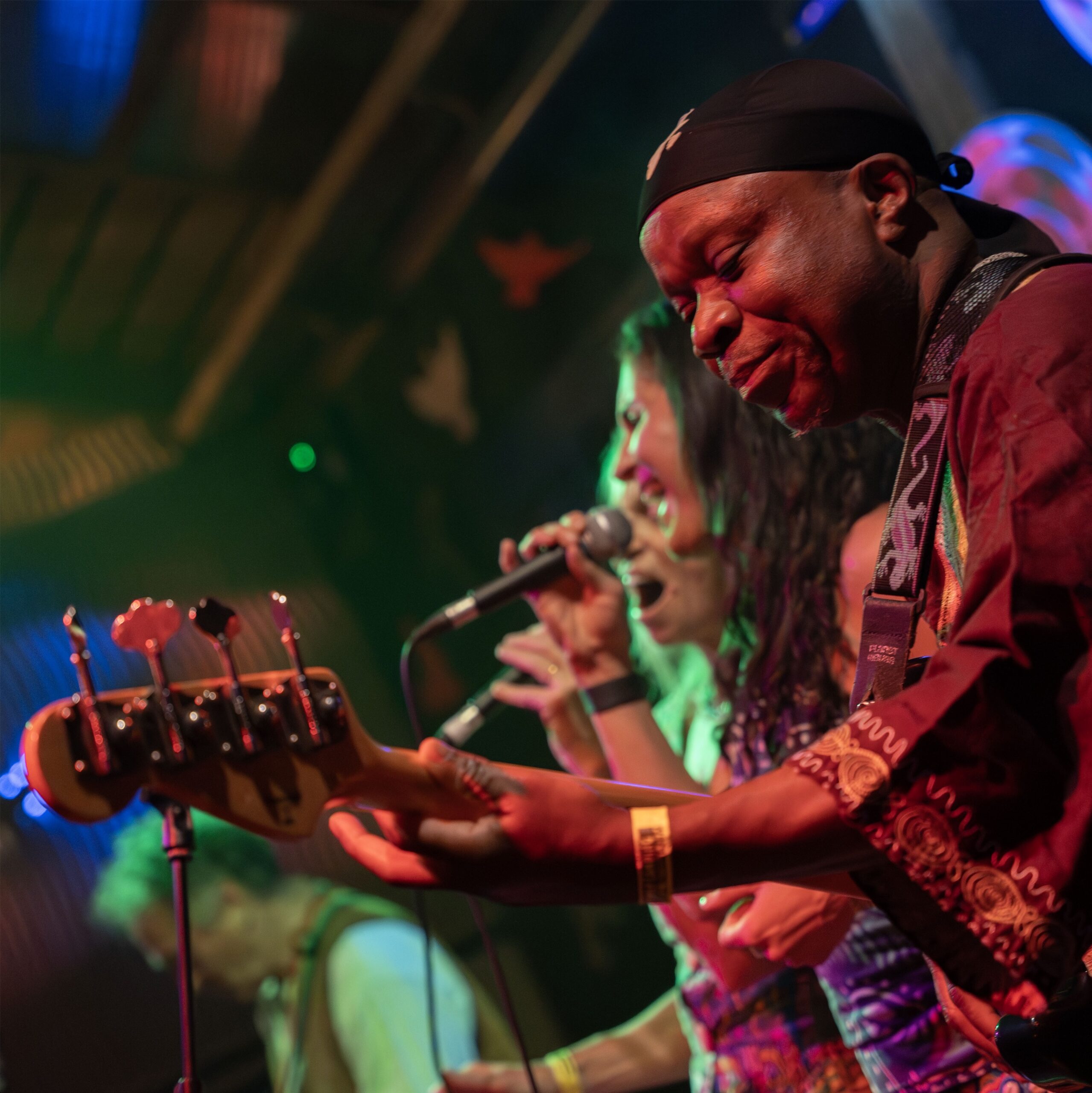
The musicians on Sing the World Awake are very much in keeping with the international nature of the project. Martin Cradick is on guitar, arrangements and percussion. Su Hart and Ellie Jamison are on vocals. Kibisingo Douglas is on bass, Clyde Kramer on drums, Ben Moneypenny on violin and Ayodele Scott on percussion. There are a number of special guests too. Freddie and Sangoweh are on vocals and Ndia on guitar for “Inner Orbit”, Api Ascaso on “Nanjinga’s Song” and Irene O’Meara on “The Swift”. The album was produced, recorded and mixed by Martin Cradick with the recording taking place in the rainforest of Cameroon and at The Vortex in Bath. Tim Turan did the mastering at Turan Audio in Oxford. That mix of field and studio is very much the way the project has been run and the music remains firmly rooted in the people and the traditions that it’s drawn from. Just as important is the band’s commitment to the Baka community benefiting from the music they’ve shared. Martin Cradick set up Global Music Exchange with Su Hart in 1995 to ensure that the royalties due to Baka musicians actually got paid out to them. Some of the money goes to individuals, some of it goes to the community as a whole to help it cope with the realities of a changing world. It’s a very important aspect of the whole thing as it’s not just about the music being appreciated, it’s about the responsibility that comes with that. The Baka voices aren’t just a source of inspiration, the people who sing them are recognised as people who have contributed to the music and who have a legitimate right to a share of the proceeds. That’s the ethical dimension of the whole thing which really underpins the artistic message of Sing the World Awake. It’s also very much in keeping with the band’s long held belief that everyone should be heard. It’s an age where technology and AI are increasingly going to be the defining forces, and Baka Beyond serve as a case in point of what can be achieved through human relationships, shared experience and a lifetime of genuine musical interaction. Sing the World Awake doesn’t set out to freeze the past. It’s about the voices from different points in the band’s history being brought together with new arrangements and a modern musical setting. The heart of the record is not simply nostalgia but the continuation of a living tradition and the people who have kept it going. The eleven tracks take you on a considered journey through language, memory, rhythm and the bonds of community with the yeli singing providing the central thread. It’s over 12 years since their last recording and they’re back with a record that is very much rooted in where they came from, and which is very much of the here and now. Sing the World Awake is a record about the forest, sure, but it’s really a record about the people, the traditions and the experiences that give music its life. It’s an invitation to listen more closely.
Facebook, Soundcloud, Youtube, Instagram, Spotify, Bandcamp, website,