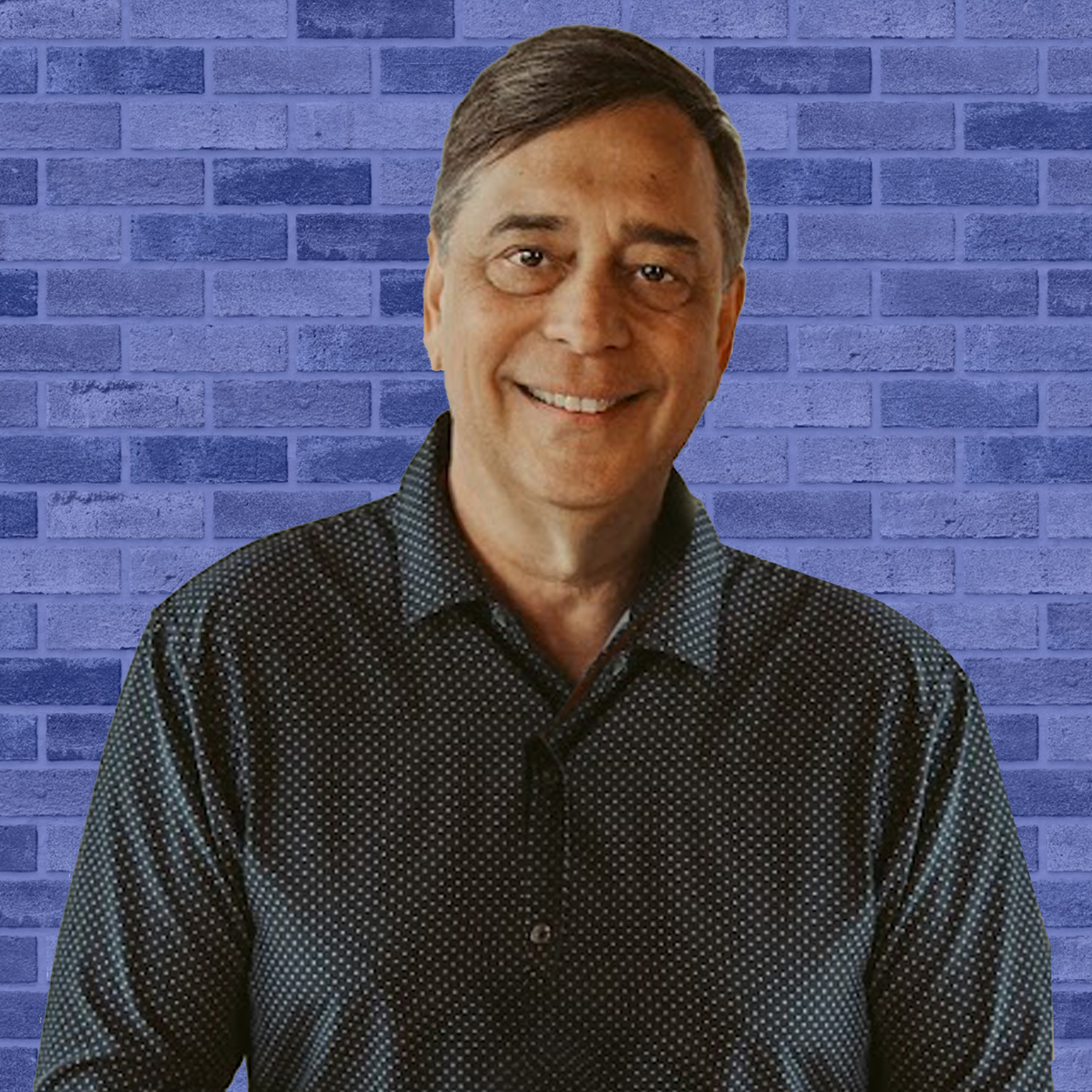
We’re excited to share this written interview with Bill Barlow, an artist whose work continues to develop a distinct voice within today’s music landscape. In this conversation, we explore his creative process, the ideas shaping his sound, and the experiences that have influenced his journey so far. From early inspirations to his current projects, Bill Barlow reflects on the thinking behind the music—how ideas take shape, evolve, and eventually become finished work. The discussion offers a closer look at the person behind the recordings, moving through both craft and perspective in a straightforward, honest way. Whether you’re already familiar with his music or encountering it for the first time, this interview provides context and insight into an artist actively refining his path.
Introduction & Background
1. Can you introduce yourself and tell us how your journey in music began?
I was at my friend’s house and his neighbor was there. The guy was a Jazz and boogie woogie musician called Harry “the Hipster” Gibson. I had just started writing some poems and that came up in conversation somehow.
Harry asked me what I wanted to do with them. I told him that I wanted to be a song writer. He laughed loudly and said, “You are not a song writer until someone will pay you for your lyrics”. I was holding a few handwritten poems, and he asked me to see them. He stopped at one and said, “This is good”. Then he reached into his pocket and handed me $50 and said, “Son, you are a song writer now”.
Ever since, I have been writing songs. If Harry hadn’t done that, I may have stopped writing. I didn’t know it, but Harry recorded my song which was released after he died. The song is called Transmission Blues.
2. What inspired your artist name, and what does it represent?
Bill Barlow is my real name. I may be creative, but not enough to create a persona of myself. With me what you see is what you get.
3. How would you describe your sound to someone hearing you for the first time?
Everything I write is a conveyance of emotions. I try to find something that is or feels deeply personal and share it. I like to find things that people can relate to and then they can sit with the song for a while. Hopefully that connection sticks with folks.
Creative Process
4. What’s your usual process when creating a new track? (combing 4&5)
It starts with an idea or a line that I want to build from. I am a lyrics first creator. Once I read through the lyrics, I look for a melodic mood that compliments the words. They have to be seamless in the way they fit together in the end. If you don’t feel something, I have failed.
5. Do you start with lyrics, melody, or production first?
6. Where do you draw most of your inspiration from?
All of my inspiration comes from real life. My experiences, encounters, and the ones I witness. Sometime a line in a conversation becomes a song.
Latest Release / Project
7. Tell us about your latest release—what’s the story behind it?
The Trouble Being Human was inspired by how much AI is taking over, literally every industry. There is an aim for perfection, speed and efficiency. And while some of that is good, I wonder what do we lose in the process? When it comes to music it won’t be long before half of your favorite songs are created by AI. Some major artists have already admitted to using AI to create tracks so they can make them perfect. But there is something intangible about a well-produced but slightly flawed human performance. It feels different and evokes emotions that aren’t there in a perfectly polished or artificially perfect production. It’s the same difference in listening to a well-produced studio record vs a live performance. You may not be able to articulate it, but the live performance gives you a connection and makes you feel something in a different way.
8. What emotions or message were you hoping listeners take from this project?
Even in a world where machines can mimic our voices and our choices, they can’t touch the raw, imperfect, emotional reality of being human. If even one track on this album hits that nerve for someone, then I’m doing my job.
9. Was there a specific moment or experience that shaped this song/album?
I’ve spent years working in advertising, recently watching agencies get hollowed out as AI replaces designers, writers, and entire creative teams. Now, even commercial music is AI generated instead of commissioned. Why pay musicians when a machine can mimic the vibe in five minutes? As I work to step away from advertising and into songwriting, the thing I actually love, I can’t ignore the fear that the window of opportunity is already closing. I’m proud that my songs are written by me, not a machine. But looking ahead, it feels like I’m not competing with other artists anymore. I’m competing with algorithmic code.
Music Style & Influences
10. Which artists or genres have influenced your sound the most?
My biggest inspiration for songwriting comes from Rob Thomas and Ed Sheeren. Rob thomas always finds a way to connect the message with the listener in an interesting way. I also love his one-word titles. Ed Sheeren seems to be a fountain of words and phrases. I love the way he seems to be able to match up with a variety of artists, and it always works. A lot can be learned from both of them.
11. How has your style evolved over time?
I guess my style is nearly the same but my focus on perfection has decreased. I want the song to flow well, sound good etc., but I am no longer trying to remove those intangible human elements. I think those are what help build a connection with the listener.
12. What makes your music different from others in your genre?
That’s a good question. I work hard on the emotional connection between the music and the listener. I think if anything makes me different is just that. My best songs, for the most part, are raw emotions, slightly imperfect delivery and a feeling that is hard to pinpoint. When that all comes together, people notice and then I get messages. My favorite feeling.
Industry & Experience
13. What has been the biggest challenge in your music career so far?
In the music business it’s all about who you know. I recently heard that David Bowie was rejected as a songwriter on a project because nobody knew who he was. That sums up the business. But then how do you go from that to being known? Someone has to back you and put you into a promotion engine. You simply can’t buy streams, even if the song you are pitching is amazing. You are at the mercy of the algorithmic jungle. But if you’re really lucky, something accidentally goes viral and you have a shot.
14. What’s one moment in your journey that made you feel like you’re on the right path?
I started writing songs when I was a kid. My friend played and sang most of my stuff. Watching people react to them and even sing along, was the spark for me. I took some time off from writing to earn a living. When I started again, the spark was still there. Now I was a better writer and ready to be the face of my own work.
15. How do you stay motivated in such a competitive industry?
I simply do what I love. I am no longer bothered by what people think or worry about not making it. If that happens, it happens. My greatest goal strangely still hasn’t changed. I want a name act to cover one of my songs. Or I can write one for them, either way that is the goal that drives me.
Personal Connection
16. What does music mean to you on a personal level?
I grew up in a house where music was an important part of our life. We listen to all kinds of music. I guess that’s why I am so eclectic today. I don’t hear genres; I just hear music.
17. Is there a song you’ve made that means the most to you? Why?
That’s a tough one. A lot of my songs have some deep meaning, but it has to be Dreams for Sale, my very first single. I had a couple of times when I literally lost everything. These were very hard patches to get through. When you go though those kind of tough times you have to park your dreams and focus on fixing the issue, even if you have no idea what the fix is. All focus needs to move to the solution. But the good news is that I did recover each time and made it out, even with a couple of dreams intact. I still get emotional sometimes when I hear that song.
18. Outside of music, what are you passionate about?
I have appreciated wine and travel most of my life. Maybe not in that order but I enjoy them both in moderation.
Fans & Future
19. How do you connect with your fans and build your audience?
The majority of fan connection is done through social media.
20. What can your listeners expect from you next?
All of my albums have a theme of sorts. My next album will be called Somewhere in Between. It’s a collection of songs that talk about people caught between where they are and where they want to be.
21. If you could collaborate with any artist, who would it be and why?
It has to be Rob Thomas. I am a huge fan of his and as I said before, I love his lyrical approach. I’d love to jam with him and throw a few pencils at the ceiling.
Closing
22. What advice would you give to upcoming artists trying to break into the industry?
Find a way to be relevant without changing what you stand for. Write about what comes natural for you and lean into the audience that likes that. But while doing that find what makes you unique, more interesting, edgier or compelling. Benson Boone does flips to get the crowd going even though his songs are already amazing. What can you do to command attention?
23. Where can people follow you and stay updated on your music?
The best places are on my socials:
Facebook: https://www.facebook.com/BillBBarlow
Instagram: @billbarlowmusic
YouTube: https://www.youtube.com/@BillBarlow
TikTok: @billbarlowmusic